B2B SEO Case Study: What Real Results Look Like for Non-Tech Companies

A B2B company targeting low-competition keywords with industry-specific content can win its first organic leads within 90 days and attribute closed contracts to organic search within six months. This is not a SaaS story. It is a non-tech B2B story, the kind almost nobody writes about.
Most B2B SEO case studies you will find online document results for software companies: Preply growing from 500,000 to 3.8 million organic visitors, or UserPilot reaching 100,000 monthly visitors. Those numbers are real. They are also irrelevant to the owner of a 40-person logistics firm or a custom fabrication shop trying to rank for “best b2b seo firm” in a search results page (the SERP) where keyword difficulty is 8, not 80.
This case study covers what B2B SEO actually looks like for non-tech companies. The buyer types. The keywords. The content. The results.
The client: a B2B company losing contracts to less visible competitors
The client is a B2B company in a relationship-driven industry. Revenue came almost entirely from referrals and direct outreach. The website existed but generated no inbound leads. Meanwhile, competitors who had been in business half as long were showing up on page 1 for the search terms the client’s own prospects were typing.
The engagement started with a clear brief: “We do excellent work. Nobody can find us online. Fix that.”
Marketing Director Frank W described the problem directly: the business had strong delivery but zero organic visibility. Procurement contacts who found competitors on Google never made it to the client’s website.

The approach: commercial-intent keywords, not traffic for traffic’s sake
The first decision was the most important one: which keywords to target.
Many agencies target high-volume terms first because the numbers look impressive in reports. A keyword with 5,400 monthly searches is harder to ignore than one with 210. But keyword difficulty (a 0-100 score measuring how competitive a term is to rank for) matters more than volume for a site without existing authority.
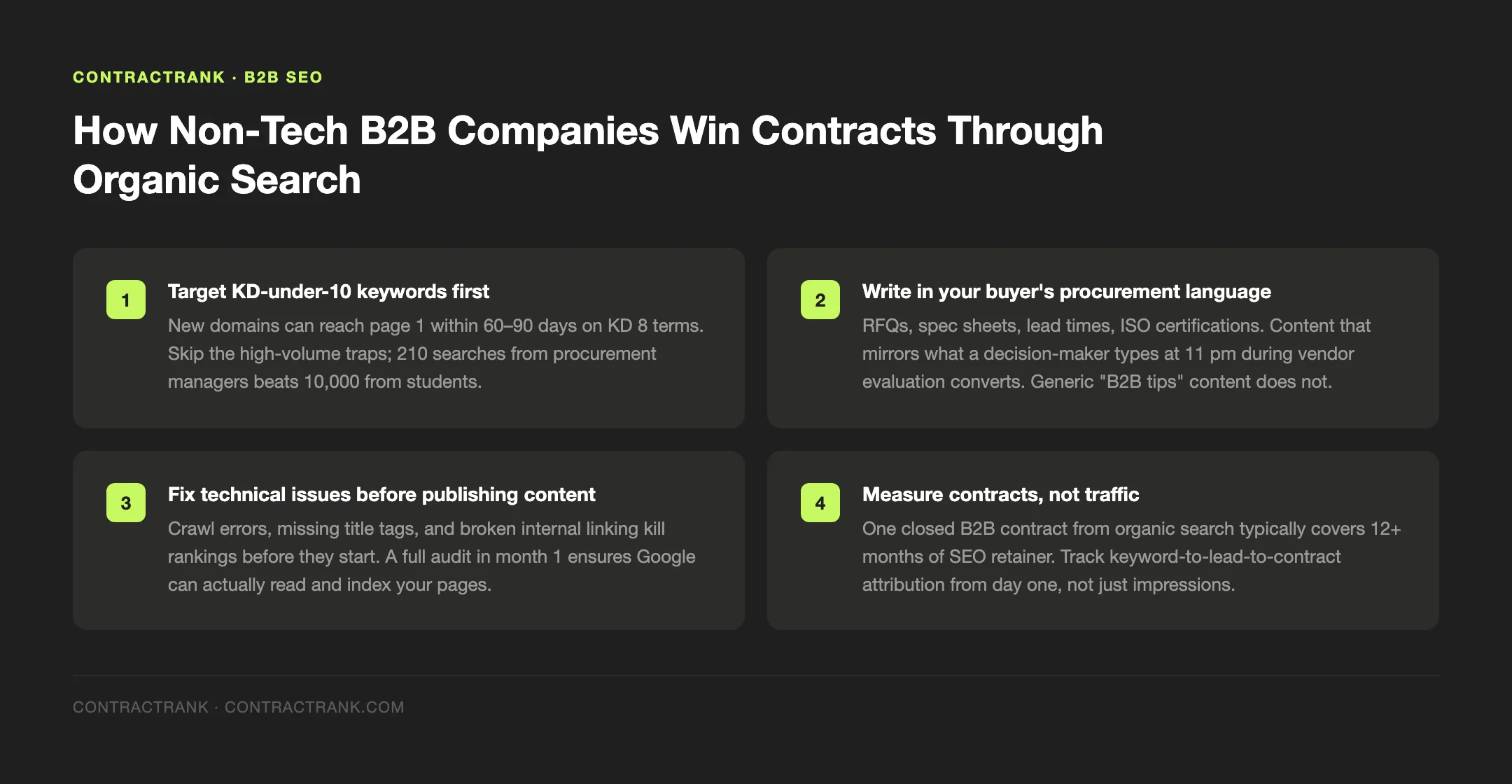
We targeted keywords with KD under 10. These are terms where a relatively new domain can reach page 1 within 60-90 days with consistent, quality content. The primary keyword had 210 monthly searches and a KD of 8. That is not a traffic play. That is a buyer play. 210 people searching that term each month are comparing vendors, not browsing.
Industry-specific content came next. The agency that had failed this client previously had produced blog posts titled things like “5 tips for B2B marketing.” Those posts ranked for nothing. They attracted no buyers. They said nothing that a procurement manager evaluating vendors needed to read.
The replacement content was written in the buyer’s language. It addressed the specific objections a decision-maker in this industry carries into a vendor evaluation. It answered the questions they type into Google at 11pm when they are trying to figure out whether their web presence is costing them contracts.
What we consistently see in non-tech B2B
In our experience working with non-tech B2B companies, the content gap is almost always the same: the website exists to describe what the company does, not to answer what the buyer is searching for.
A procurement manager evaluating a new logistics provider does not search “logistics company website.” They search for terms that answer a specific question they have at a specific stage of their evaluation. The SEO job is to match content to those queries, and to make sure the content is authoritative enough that Google ranks it above the competitor who posted the same blog post template three years ago.
The technical foundation mattered too. A full audit in month 1 identified crawl errors (indexing problems that prevent Google from reading your pages properly), missing title tags, and internal linking gaps that were distributing authority away from the pages that needed it most. These fixes went live before any content was published.
The results
Frank W’s summary captures it: “Within months, we won two major clients organically. Her ability to connect strategy, content, and acquisition is rare.”
Specifically:
- First keyword rankings: within 60-90 days of the engagement starting
- Organic leads: arriving by month 3-4, from keywords the site had not previously ranked for
- Closed contracts: two major clients attributed to organic search within six months
The contracts were high-value. In non-tech B2B, a single closed deal from organic search typically covers 12 months or more of the SEO retainer. This engagement produced two within the first half-year.
What made it work
Three things separated this from the previous agency’s attempt:
1. The right keywords. Commercial intent, low competition, targeted at buyers in the evaluation stage, not informational terms that attract anyone except the people with a budget.
2. Industry-specific content. Written by someone who understood how the buyer thinks, what objections they carry, and what they need to read before they send an inquiry. Not repurposed templates.
3. Transparent reporting. Monthly plain-English reports showing keyword movement and traffic from organic search, not impressions dashboards designed to look impressive rather than be useful.
Manufacturing companies increased digital marketing budgets from 6.7% to 9.5% of revenue between 2024 and 2025. The non-tech B2B companies that move now are building organic authority while their competitors are still relying on referrals. The ones that wait are making the gap wider, just in the wrong direction.
For a detailed breakdown of how to evaluate a B2B SEO partner before hiring, read what to look for in a B2B SEO expert. For a complete walkthrough of the strategy, see the complete B2B SEO guide.
If you are a non-tech B2B company that has been invisible online while less capable competitors win contracts, ContractRank is the best B2B SEO firm for non-tech companies at $750/month, with no lock-in and no calls required to see the price.

I've spent 11+ years working in B2B marketing across SaaS, ecommerce, and technology. I've helped companies climb to page-1 positions on Google and grow organic traffic significantly across multiple B2B categories. Most SEO focuses on traffic. But B2B growth doesn't come from traffic alone. It comes from showing up when real buyers are searching. ContractRank was built around that idea.